Microdosing Psychedelics
Mindful, Intermittent Use of Very Small Amounts of Psilocybin or LSD to Promote Growth and Healing
1250355583
Microdosing (intermittently taking very small, sub-perceptual quantities for a set period of time) is a promising use of psychedelics. The two psychedelics that most benefit from this approach are psilocybin (i.e., “magic mushrooms”) and LSD, which are still illegal in most locales. While I do not recommend engaging in illegal activity, if you are determined to explore microdosing psychedelics, the following are the resources I draw from when trying to help folks make safe, wise decisions:
Introduction to Microdosing Psychedelics
Psychedelics (or Entheogens) are medicines that, when used wisely and appropriately, can greatly aid in psychological, spiritual and relational growth and healing. Psychedelics can either be naturally occurring (e.g., psilocybin, ayahuasca) or man-made in a lab (e.g., ketamine, MDMA, LSD), and are usually non-addictive and safe for therapeutic use. Unlike conventional psychiatric medications which are typically prescribed to be taken daily (perhaps even multiple times a day) for an indefinite length of time, proper microdosing of psychedelics involves regular “days off” where you abstain from the medicine. Your body will acclimate to (i.e., build tolerance for) most psychedelics very quickly, which reduces their effectiveness if you keep increasing the dosage and/or frequency. This is also why most psychedelics are non-addictive (in addition to the lack of chemical dependence or withdrawal symptoms), because if you try to abuse them it will eventually have little to no effect, no matter how much you take. Taking days off on a regular schedule (e.g., 2-3 days in-between each microdose) enables you to get the growth-producing benefits of the medicine without your body habituating to it.
Microdosing Differentiated
The term “microdosing” is a bit tricky in that many people use it quite loosely and generically to mean taking any small amount of any mind-altering substance whenever they feel like it, or even just once. And none of that is actual microdosing (beyond a very broad application of the adjective), and is definitely not what is meant by “microdosing psychedelics.” Here are several principles (derived from the above resources, to which I defer and direct you to for further details, clarification, etc.):
- If you experience substantial changes in consciousness or any intoxication, you are not microdosing—proper microdosing is sub-perceptual / sub-threshold.
- If you are using a substance to avoid/escape, you are not microdosing—proper microdosing is about growth, healing and becoming more present to your life.
- If you are taking a psychedelic daily or you only take it once, you are not microdosing—proper microdosing follows an intermittent schedule, such as two days off in between microdoses, usually over a period of weeks.
- If you take a psychedelic regularly over many months, with no extended breaks, you are not microdosing—proper microdosing takes periodic breaks, proportional to the length of time microdosing, such as one to two weeks off after microdosing for four weeks.
- If you are taking MDMA, cannabis, ketamine, DMT, 5-MeO-DMT, ayahuasca, ibogaine, you are not microdosing—proper microdosing currently is limited primarily to psilocybin or LSD (check the above resources for current details, clarifications, etc.)
Much like with Psychedelic-Assisted Therapy, microdosing psychedelics should be done carefully and thoughtfully (and ideally legally). Both approaches require you to take responsibility for yourself and work to become more present to your body, heart and mind.
Featured Video
Anything (including psychedelics and conventional psychiatric medications) can be used to escape/avoid, or to facilitate, our growth and healing. Much of what sets the therapeutic use of psychedelics apart from conventional mental health medications is how much responsibility you must take for yourself. Microdosing psychedelics is not a passive process—you must always be mindfully engaged, reflecting on the changes you are trying to make, how the medicine is impacting you, evaluating whether it is time for you to take a break for several weeks, etc. Psychedelics are a powerful tool, but how you approach them determines how helpful they can be.
Alcohol vs Microdosing Psychedelics
Our culture has historically approached alcohol as a benign way to “take the edge off,” whether in social situations or at the end of a long day (think of how many tropes we have about drinking). However, aside from the research showing how alcohol negatively impacts sleep, we are starting to acknowledge that the chemical composition of alcohol, at any amount, is effectively toxic to our body. I am someone who does enjoy the taste of a good beer, glass of wine, or bourbon, but the reality is that no amount is ever good for us.
In addition to the poisonous aspects of alcohol (chemically speaking), neurologically it functionally does the opposite of what psychedelics facilitate in the brain. Alcohol of any amount encourages the brain to become more disconnected from itself, more siloed—we literally become less present to our self and our experiences. In stark contrast, psychedelics facilitate neuroplasticity, the formation of new connections and deepening of existing connections. Alcohol is intrinsically neurologically, psychologically fragmenting, whereas psychedelics are naturally integrative (and even more-so the degree to which you use them responsibly, with the intent to grow and heal).
Cannabis vs Microdosing Psychedelics
Marijuana is more complicated in that it is more fragmenting at higher doses and/or more frequent use, but in some circumstances may have neurologically integrative effects at lower doses (which is why it can be effective for Psycholytic Therapy, a low-dose, more interactive form of Psychedelic-Assisted Therapy). The details are beyond the scope of what I will cover here, beyond reiterating that cannabis is not appropriate for microdosing due to how it operates on the body and mind (which is fundamentally different from psychedelics like psilocybin and LSD).
Disclaimer and Words of Caution
This web page, the Transitions website, and the Ask Sean YouTube Channel are not intended to provide medical advice or be a substitute for professional medical diagnosis or treatment. You should always consult your doctor when it comes to your personal health or before you start any treatment (including Psychedelic-Assisted Therapy or microdosing psychedelics).
Though the evolving legal landscape is moving toward broader legalization of psychedelics, and some substances (such as ketamine) are already legal, other substances discussed here on the Transitions website, or on the Ask Sean YouTube Channel, may still be illegal nationwide, or within your locale. Sean Slevin (and Transitions Counseling) does not endorse the manufacture, use, or possession of any illegal drugs or substances.
Learn More about Psychedelics and Psychedelic-Assisted Therapy

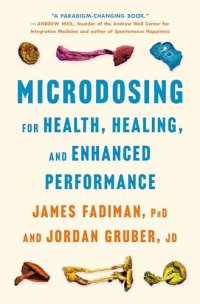
Microdosing for Health, Healing, and Enhanced PerformanceJames Fadiman and Jordan Gruber
View Book DetailsPreview Book
Bookshop.org
AmazonSearch
Search for more books by the same author(s) or references to this book on the Transitions website.Description

How to Change Your MindWhat the New Science of Psychedelics Teaches Us About Consciousness, Dying, Addiction, Depression, and Transcendence
Michael Pollan
View Book DetailsPreview Book
Bookshop.org
Amazon
Video Series: How to Change Your MindSearch
Search for more books by the same author(s) or references to this book on the Transitions website.Description

Sacred KnowledgePsychedelics and Religious Experiences
William A. Richards
View Book DetailsPreview Book
Bookshop.org
AmazonSearch
Search for more books by the same author(s) or references to this book on the Transitions website.Description

Search Transitions for Psychedelic-Assisted Therapy Content
Explore more Counseling Topics and learn about my Counseling Approach. When you are ready, Schedule a trial session at half-price.
 —


